
The idea that watermelon can do what Viagra does has been circulating for so long it barely registers as a claim anymore. It’s also not exactly true, and it’s not exactly false either, and that particular contradiction says something about how badly humans want a food-based fix for something far more complicated than food.
It is not a new obsession. Long before a health podcast guest started talking about nitric oxide like he’d discovered fire, people were pairing certain foods with virility. Oysters in ancient Rome. Ginseng in traditional Chinese medicine. Pomegranates in Persian folklore. What’s changed is not the desire for a fix. What’s changed is that we now have actual clinical trials instead of vibes and mythology.
So let’s separate the two.
What people are actually asking online
Search Reddit for this and a pattern shows up fast. A guy in his late twenties or thirties, otherwise healthy, notices things aren’t as reliable as they used to be. He’s confused, because he assumed ED was something that happened to men in their sixties, not to him. The replies are where it gets interesting. Some commenters swear by cutting processed food and loading up on leafy greens. Others push back hard, pointing out that stress, poor sleep, anxiety, or porn are far more likely culprits than anything on his plate. A smaller, more clinical crowd just says see a urologist and stop Googling pistachios.
That tension between try the pistachios and see an actual doctor is basically where the science sits too.
What’s actually been tested in humans
Not theorized about in a wellness blog. Tested.
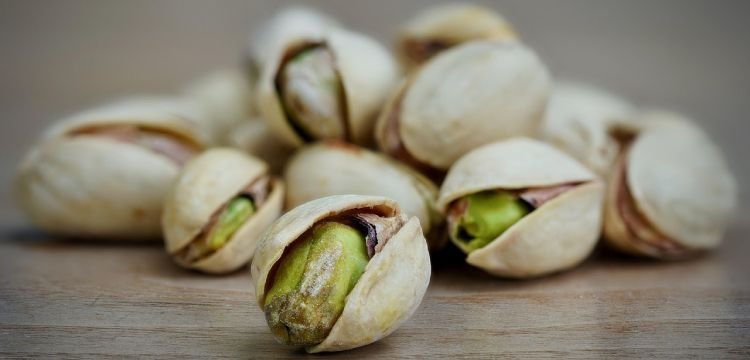
- Pistachios: men with ED who ate three to four handfuls a day for three weeks showed measurable improvement in erectile function scores, better blood flow through the penile artery, and improved cholesterol. Small study, short duration, but a real signal, not a rumor.
- Watermelon and citrulline: the body converts citrulline into arginine, the raw material for nitric oxide, the same molecule PDE5 inhibitors work through, just far more diluted. Italian researchers found that roughly five servings of watermelon a day improved erection firmness in men with mild ED. Getting there consistently through fruit alone is a lot of watermelon.
- Leafy greens: nitrates in spinach and arugula follow a similar path toward nitric oxide production. This isn’t ED-specific research so much as general vascular science, but the mechanism holds.
- Berries and flavonoid-rich foods: a joint Harvard and University of East Anglia study tracking over 50,000 middle-aged men found higher flavonoid intake linked to lower ED rates, especially under age 70.
- Fatty fish: omega-3s support the same vascular health that underlies erectile function. Nobody has isolated salmon as a standalone fix, but it fits the pattern.
- Coffee: a large case-control study found a modest inverse relationship between caffeine and ED, with the benefit showing up around two to three cups a day.
Notice the theme running under all of it. Almost everything that helps, helps because it supports blood flow. Not because of some mysterious manhood property baked into the food itself.
The myths that need to die
- Oysters make you virile. The zinc content is real. The direct line to erections is mostly folklore repeated so often it now passes as fact. Zinc only moves the needle if you’re actually deficient, and most men eating a normal diet aren’t.
- Pomegranate juice works as well as Viagra. This claim shows up constantly in low-quality health listicles with zero clinical trial behind that specific comparison. Pomegranate may support vascular health as part of a broader diet. It is not a PDE5 inhibitor with a marketing problem.
- There’s one magic food. Every urologist studying this says a version of the same thing. No single ingredient fixes ED. The research consistently favors overall dietary patterns, Mediterranean or DASH-style eating, over any individual superfood.
- Oats boost testosterone. Persistent gym-forum claim, thin evidence. Oats make a fine breakfast. They are not hormone therapy.
Food versus exercise, and which one actually moves the needle
This is the part most food-focused content quietly skips, because the answer isn’t flattering to the food angle.
Aerobic exercise has, by a wide margin, the deeper evidence base. A meta-analysis of eleven randomized controlled trials found that regular aerobic exercise produced a statistically significant improvement in erectile function scores compared to controls, and the benefit was largest in men whose ED was already more severe. Other reviews looking specifically at physical activity found consistent, reproducible improvement across hundreds of participants.
Now compare that to the diet research. Mostly small trials, short durations, and outside of the pistachio study, often observational instead of interventional. A recent systematic review pooling both diet and exercise concluded that lifestyle interventions overall produce a modest but significant improvement, without clearly separating which half is doing the heavier lifting.
Read between the lines and the honest answer is that exercise currently has the stronger, more consistent clinical case. Food matters. It’s the supporting actor, not the lead.
Why the podcast circuit is overselling this
When a health podcast frames the food and blood flow connection as some hidden truth the medical establishment doesn’t want you to know, that framing is not accurate. Doctors have been publishing on Mediterranean diets and erectile health since the early 2000s. The pistachio study is from 2011. The watermelon citrulline research is over a decade old. None of it was ever a secret. It was sitting in peer-reviewed journals and mainstream health sites the entire time, just without a charismatic host and a dramatic sound bed.
The only new thing is the packaging.
More people paying attention to their vascular health is genuinely good. But treating “eating more nuts and vegetables” like a breakthrough discovery does a disservice to the exercise research, which is arguably the stronger finding here, and it quietly nudges people toward thinking a handful of pistachios can substitute for an actual conversation with a doctor when ED shows up out of nowhere in a thirty-year-old with no other risk factors.
The practical version
If you’re dealing with erectile dysfunction, the food that helps is unglamorous. More plants, more fish, more nuts, less processed and fried food, plus regular cardio. None of it works overnight, and none of it replaces ruling out the more common real causes: poor sleep, chronic stress, psychological reasons, alcohol, smoking, low testosterone, or a medication side effect. The Reddit threads asking is this normal at thirty usually get the right answer buried somewhere in the comments. Probably not, and it’s worth getting checked instead of just restocking the pistachios.
